In the 1960s very few children went to prep schools and most of us just attended the nearest local state primary school. Virtually no preparation took place for the 11+ exam and generally the top 10-15% of each class passed the exam and then their parents sent them off on the bus. Today things are more complicated. To the great confusion of many, the Grammar school heads publicly advocate a “no tutoring” mantra. In the good old days, this made absolute sense.
However if you consider that the children at prep schools have up to four times the homework of state school children and start learning techniques specifically aimed at the 11+ exam from Year 2, then you would have to say the “Ostrich Syndrome” may not be the way forward. The parents of prep school children see with greater clarity the appeal of a high school education at such a level without the financial burden of £9000 per annum fees and consequently tutoring is a very cheap option.
Take Heart !
I have been teaching for 25 years (9 of which in the private sector ), and having spent the last 7 years tutoring. I can assure you that my top students every year have all come from state schools. The simple fact is that these children are not stretched.
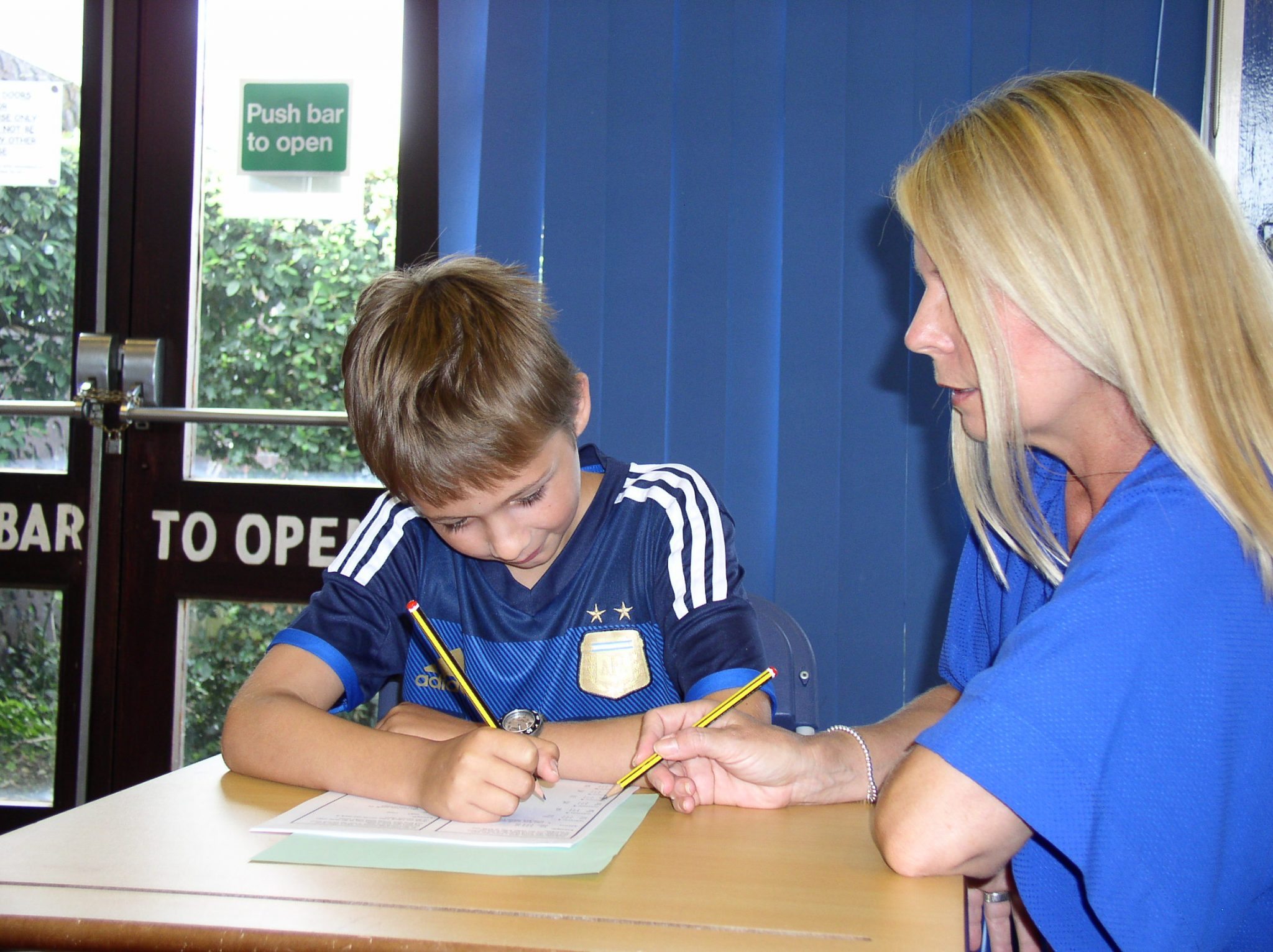
If your child starts with a tutor in year 4 or 5 ( the extra year really does help) with just one hour a week and some homework you soon see your child blossom. The children learn in small groups which become more of a learning club instead of the rather intimidating one to one with a teacher. There are generally two adults in attendance.
Is my child a potential a grammar school student?
This is a good question. If your child is in the top quarter of his or her primary school year group and is keen to learn, there is no reason why not. It is not always about how clever your child is. I have had many children who just worked very hard and took on board technique who are current doing very well at schools like CCHS and Westcliff.
Contrary to “popular belief “ I do not know of one child who passed the 11+ and struggled at grammar school. If you get through the filter, you are the right student.
The popular concept of grammar schools in this country has been to provide an almost “private school education “ to ordinary children whose parents could not otherwise afford it. In Essex we are lucky to have some of the finest grammar schools in the country, all of which can provide the very highest level of education for free!
Because of the selection process, your child will be able to study during the most critical part of their education with like minded children who want to learn and succeed without the distraction of those who are less interested or motivated.
If you visit websites of the local grammar schools there are plenty of clues at to why their students are so successful. One phrase, “learning without limits” clearly defines the setting of expectations, so different to the more conventional outlook from most schools.
The truth is that those expectations are realistically achieved with old fashioned values, discipline, structure and hard work turn the children into the stars of the future, not a fancy uniform. Whichever way you look at it, everyone knows that the grammar school students earn credibility without someone else paying for it. That is why, when it comes to selection for the countries premier universities, grammar school children are at the top of the list.
Many parents have told me that when they had enquired at their primary school as to whether their bright child should be considering applying to a grammar school they were simply asked, “Why would you want to do that?” . This line of thought is compounded by the popular view that the grammar schools have become “state private schools”, the implication being that if your child didn’t go to a prep school, it’s not for you.
At primary school level, with budgets stretched it is understandable why they don’t want to get involved in 11+ preparation, but is it really fair on the three or four children from each year group who are entitled to go? Aren’t they exactly the children the schools were instigated for?
What does it cost?
Tutoring costs between £25-30 per week, which, when you consider that within a year your child is likely to be on par with privately educated primary school children whose parents routinely pay £6000 a year, is pretty good value for money.
What if they don’t pass? Well, if that happens you still know that your child has reached a much higher potential than before and since state high schools are streamed, it is likely that he or she will be in the top set and earmarked for the talented and gifted programme.
Susan Wills is a private tutor based in Chelmsford. Contact her for more information on susanwills85@gmail.com